
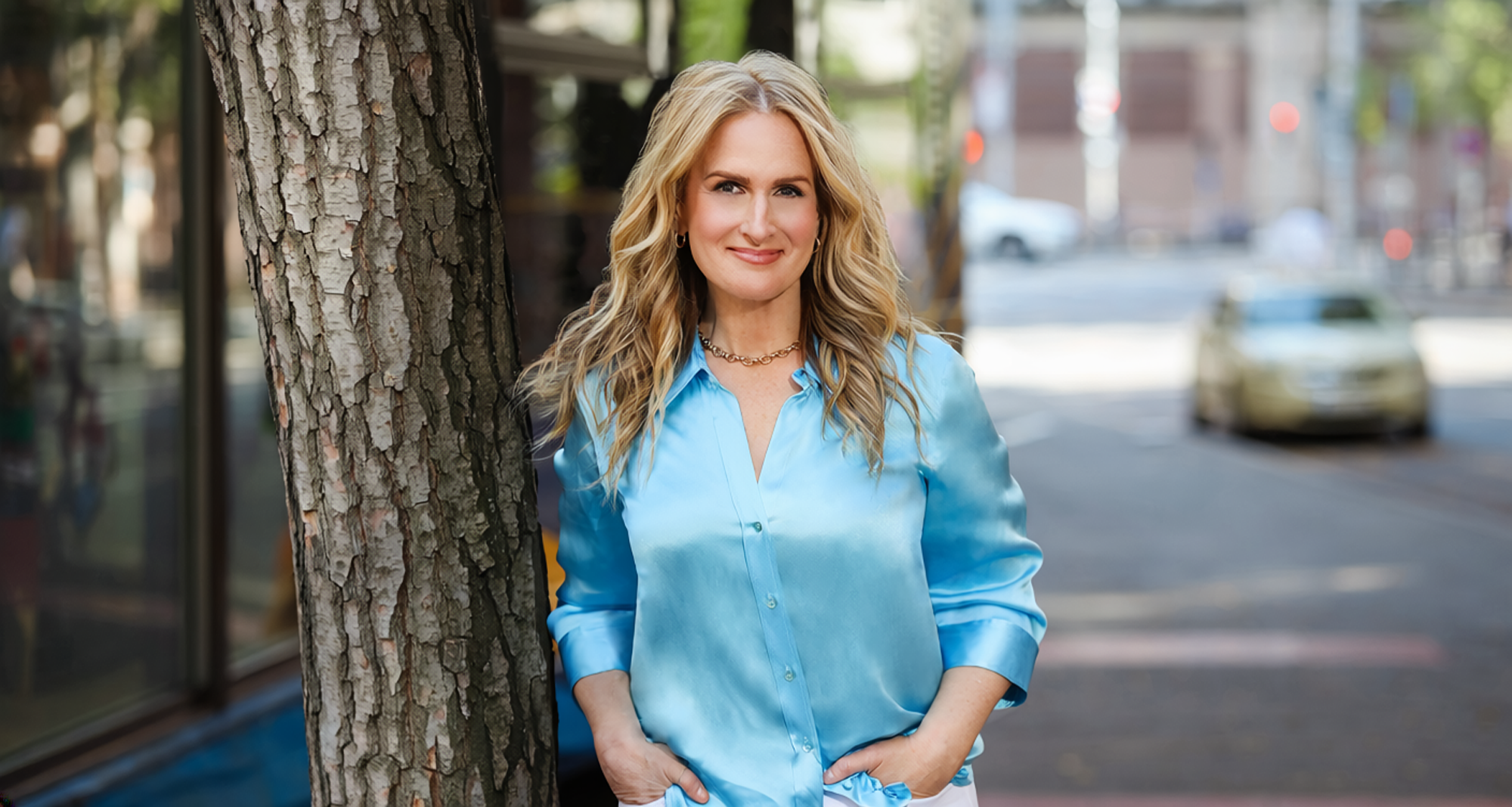
Michele Margolin knows what it feels like to be successful on paper and completely lost on the inside. After years of practicing law as a criminal defense attorney, litigator, and advocate for children, she was good at her work — and utterly drained by it. She wrestled with "shoulds" and "have to's.” She applied half-heartedly for different law jobs, went to therapy, read the books, and listened to the podcasts. Nothing moved her forward in a sustainable way.
Then came coaching. And everything changed.
Today, Michele is a thriving iPEC-trained coach who works with C-suite professionals, entrepreneurs, and women reentering the workforce — helping them untangle the thinking that's kept them stuck and find their way to what they actually want. Her story is a powerful reminder that the way forward is rarely about becoming someone new. It's about finally becoming more of who you already are.
You describe having been "stuck big time, many many times" before finding coaching. What did stuck actually look like for you? And why do you think coaching was the thing that finally got you unstuck?
It started as restlessness after years of practicing law — criminal defense, litigation, trial counsel, and as an advocate for children in custody hearings. I was good at it, and I don't disown a minute of it. The way I think, listen, and cut to what matters all come from those years. But being good at something and being right for it turned out to be two different things. The stress and conflict wore on me. So did the sense that whole parts of me weren't getting used. I kept applying for other legal jobs without putting much heart in it, which is what you do when you know something is off, but not exactly what.
Then came 9/11. We lived twenty blocks from the World Trader Center. In the aftermath I volunteered with the Salvation Army, then worked as a family advocate with Safe Horizon at the Family Assistance Center on Pier 94, sitting with families of the people who had been killed. It was some of the hardest work I have ever done and some of the clearest. It told me something that never went away: I wanted to be in the room with people, in real conversation, making a direct difference.
After that, the restlessness in my job got louder. I took on leadership roles at my kids' schools and in my community. I asked everyone for advice — friends, family, mentors. I went to therapy, read books, and listened to podcasts. None of it moved me forward for very long.
If you have experienced a version of this (most of us humans have), you will know the feeling: Overwhelmed. Chasing my own tail. Stuck in place. A little ashamed that as a capable person, I couldn't just sort it out. Left alone long enough, that has a real cost. I was anxious and at one time, depressed.
What finally cut through wasn't more advice. It was going through iPEC’s coach training program!
The highest quality coaching is about forward motion and untangling the thinking you didn’t know was holding you in place. For the first time I looked straight at my own assumptions — the automatic ones I'd had for decades — and saw that some of them were working against me, and that I could choose differently.
The biggest realization was about leadership. I had so much experience leading other people very well — a courtroom, a cause, a community, a household. What I hadn’t focused on was leading myself. No one had ever asked me the question that turned out to be the whole thing: what do you actually want now? I hadn't answered it because I had never let myself ask it. That is the work I do now.
Did you dive right into your coach training enthusiastically, or did you experience any resistance?
I had plenty of resistance. My first training weekend was on Zoom, during Covid, and I spent a good part of it half sure I had joined something a little culty. I rolled my eyes at how soft some of it sounded.
Then it worked on me, which was harder to argue with. I had always thought of myself as self aware, and up to a point, I was. But I had never looked at how I actually think, and some of those patterns were so automatic I had never once questioned them, even as they held me back. Realizing I could make different choices, and that those choices opened up options I hadn't known were there, changed everything. That is the point I decided I could build a business of my own.

Reinventing yourself professionally takes a lot of courage, especially when you've already built something successful. What was the hardest part of making that leap?
I don't buy the word reinvention. It suggests you have to become someone else — tear it all down and start over. That is scary, and it is wrong. What actually happens is you add. You bring every part of yourself that was already working forward into what's next. Nothing gets thrown out.
The hardest part, honestly, is getting comfortable being uncomfortable. The inner work is no fun at times. But that kind of discomfort creates growth. The other kind — staying stuck, year after year, not moving toward what you actually want — does the opposite.
You call yourself "results-driven" when it comes to your work with clients — how do you balance the inner work of coaching with the need to drive results?
I coach successful, ambitious women who have hit a point where what they're doing no longer fits, from senior leaders and executives at major companies to founders and startup operators, and women somewhere in between. And through Bottomless Closet, women fighting to get into the workforce at all.
Most of them come to coaching wanting to move right now — to a bigger role, an exit, or the next thing. I send them upstream first, to the thinking that drives the action. It sounds like the slower route, but it isn't. They leave with real results they're proud of; often better than the ones they came in chasing. For me the inner work and the results were never a balancing act. One produces the other.
You've developed the Margolin Method™, which tells me you've thought deeply about what actually works with your clients. What guidance do you have for coaches wanting to create their own unique method?
iPEC’s curriculum is incredibly robust and comprehensive. For me, making it my own meant digging into each concept and figuring out what it meant to me, and what it looks like in action. I did that in three steps:
-
-
I put it into my own words. I took the concepts I learned, whether it was Energy Leadership®, the energetic influencers, foundational principles, or other parts of the curriculum, and asked myself, “What does this actually mean to me? What does this look like in real life?” I kept working with each concept until I could explain it in a way that made sense to me.
-
I looked at it through my clients’ eyes. I asked myself, “What does this mean for the people I want to work with? How might this show up in their lives?” I wanted to understand how these concepts would translate in the real life of someone sitting across from me.
-
I found the words my clients would relate to. Once I understood the concepts for myself and thought about how they might apply to my clients, I translated them into language that felt natural and familiar. No coaching jargon — just words that make sense in real life.
-
How did your iPEC training, in particular, support you in your career journey and the work you now do with clients?
The training was serious and thorough, and it gave me so many things that are foundational for my work. One was a way to look straight at how people think, and a shared language that gives clients a real place to start instead of a vague sense of things.
The other was the one and only, incredible Energy Leadership® framework which will always be a trusted powertool for my own growth and for every client I work with. I have spent years adding my own research and experience on top of it to keep adding value for the women I work with.
For grads who are in their own life or career transformation right now, what do you wish someone had told you earlier in that process?
That you will keep growing and changing for the rest of your life, and that this is not a malfunction. Does it feel lousy sometimes? Of course. There are growing pains. But outgrowing things that once fit isn't a sign something is wrong with you. It is what being an adult is, with ongoing growth and iteration forever! And that is the best news of all.
Considering your own second act?
If any part of Michele's story feels familiar — the restlessness, the "shoulds," the sense that something needs to change but you're not sure what — you might be closer to your own turning point than you think.
Join one of our free upcoming webinars to experience the power of coaching firsthand and explore if this could be the next step on your path.
More About Michele Margolin
Michele Margolin, JD, PCC, ELI-MP, is a leadership and executive coach working toward her MCC, and the creator of the Margolin Method™. Michele has spent years coaching so many amazing and successful women leaders through whatever their "what's next?" turns out to be. She also consults on leadership and organizational development with NexaLearning. Championing and lifting up women is at the heart of everything she does.
Her clients are senior leaders and executives at major companies, founders and startup operators, along with the women she coaches through Bottomless Closet. She has appeared on numerous podcasts, with more on the way, and launches a new workshop for women leaders this year.
A lifelong New Yorker and Knicks fanatic since the '90s, you can often find Michele out and about in NYC, meditating, playing music too loud, at the theater, cooking up a new recipe, or with her family and her gorgeous golden retriever.